
You paid. Week 2 is done. Your rankings haven’t moved.
Your Google Search Console is showing a flat line, your agency sent a “we’re working on it” update, and you’re sitting there wondering if you just handed someone $500 to do nothing. That feeling is normal. It’s also usually wrong — but only if your agency is doing the right things.
Affordable SEO services for startups refer to budget-conscious SEO packages — typically $300–$700/month — designed for early-stage businesses with new websites, limited domain authority, and no existing organic traffic baseline. Month 1 is exclusively a foundation-building phase. Ranking movement is not the goal. Infrastructure is.
Here’s what should actually be happening — week by week.
Why Nothing Looks Different After Week 2 (And Why That’s Fine)
Startup founders who’ve just paid for SEO often report the same experience: they Google their target keyword, they’re not on page one, and the silence from their agency feels like theft. It’s an understandable reaction.
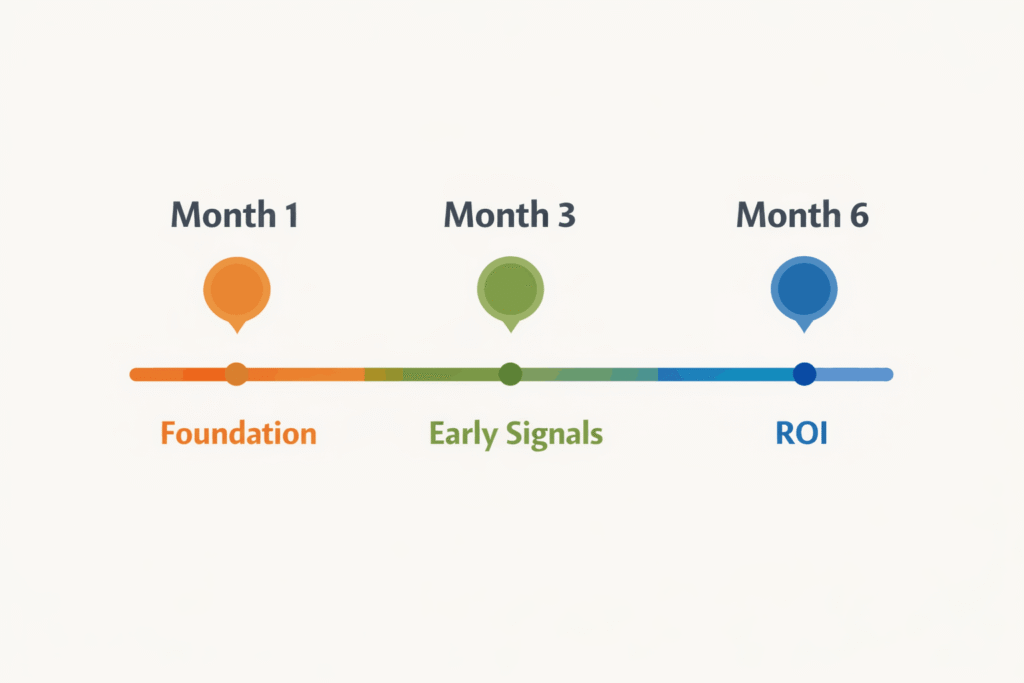
The reality is that Month 1 SEO produces zero visible ranking results in nearly all cases — and any agency promising otherwise is either lying or using tactics that will damage your domain long-term. According to Shopify’s SEO Senior Specialist Arthur Camberlein (Shopify Blog, 2025), most sites begin seeing measurable ranking signals only around Month 3, with consistent ROI appearing between Months 6–12. Month 1 is entirely setup.
Or maybe I should say it this way: think of Month 1 SEO like laying a foundation before building a house. You don’t move in during Week 2. You pour concrete.
What your agency should be delivering in Month 1 is a body of documented work — audits, research, configurations, and a prioritized action plan — not a traffic graph that bends upward. If they can’t show you that documentation, that’s the actual red flag.
Most people assume Month 1 should produce at least some ranking movement. The data says otherwise — and agencies that let clients believe that are setting up churn at Month 3.
What a Legitimate Agency Does in Each Week of Month 1
Affordable SEO for startups in Month 1 follows a predictable structure when done properly. To understand what you’re paying for, here’s the standard week-by-week breakdown:
Week 1 — Access, Audit Setup, and Baseline Configuration
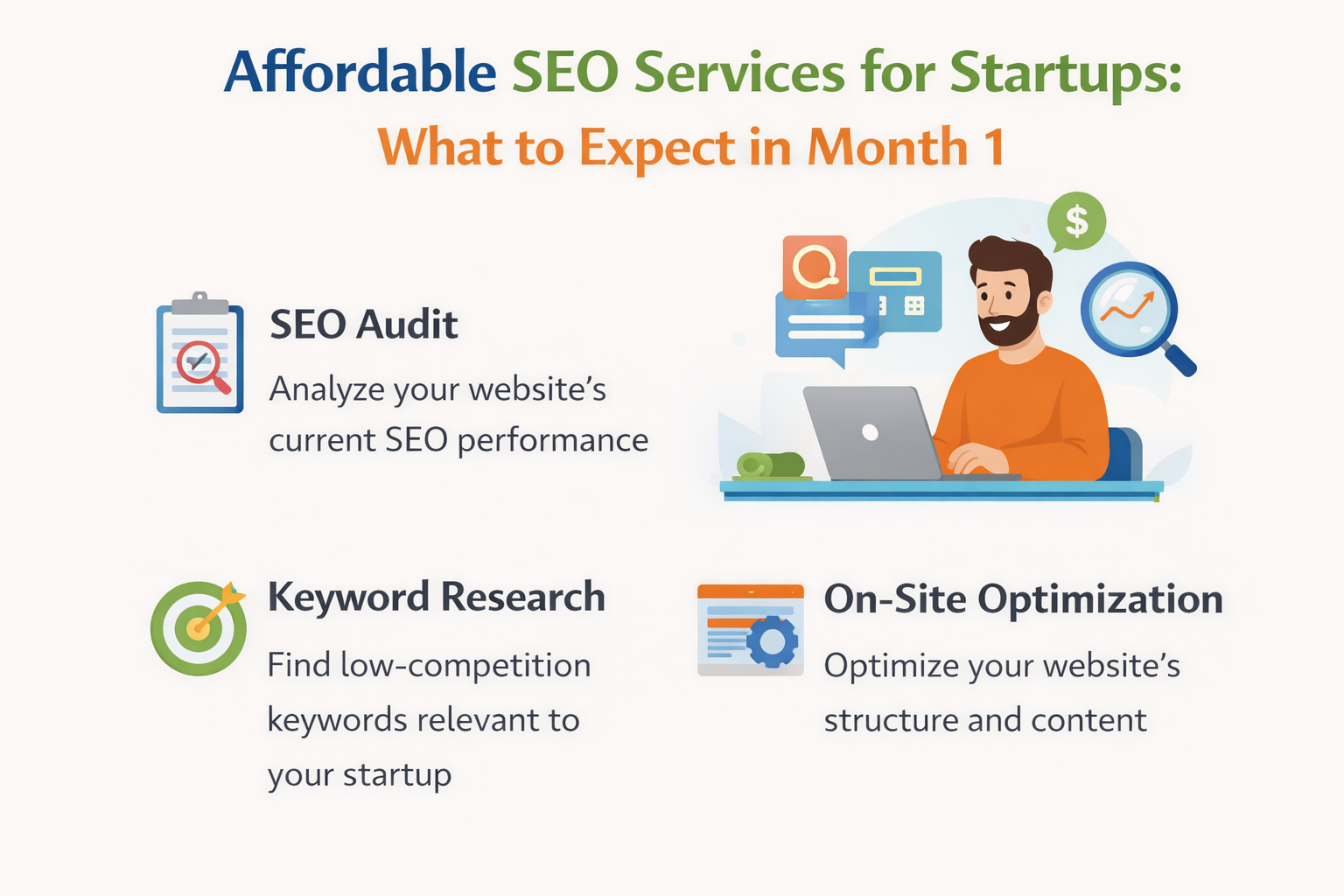
Week 1 is entirely administrative and diagnostic. Your agency should be requesting access to Google Search Console, Google Analytics 4, and your CMS. They’ll set up crawl tracking using a tool like Screaming Frog or a similar technical auditor to map every URL, broken link, redirect chain, and indexing issue on your site.
Google Search Console must be fully configured and verified by the end of Week 1 — full stop. If your agency hasn’t asked for GSC access in the first five days, ask why.
This week also includes a competitor landscape snapshot: identifying 3–5 direct competitors, pulling their ranking profiles using Ahrefs or Semrush, and noting keyword gaps your startup could realistically target. Quick note: “realistically” means low-competition, long-tail terms — not “best CRM software” on a 2-month-old domain.
Week 2 — Technical SEO Audit and Keyword Research
The technical audit report should land in Week 2. It covers crawlability, page speed scores (Core Web Vitals), mobile responsiveness, duplicate content flags, thin pages, missing meta titles, and broken internal links. For a new startup site with 10–30 pages, this audit typically surfaces 15–40 fixable issues.
Simultaneously, keyword research moves into execution. A proper Month 1 keyword map for a startup budget includes 20–50 target keywords organized by intent — informational, commercial, and transactional — with search volume, keyword difficulty scores, and a priority ranking for which pages to optimize first.
That’s a full week of real work. It just doesn’t show up in your rankings dashboard.
Week 3 — On-Page Optimization Begins
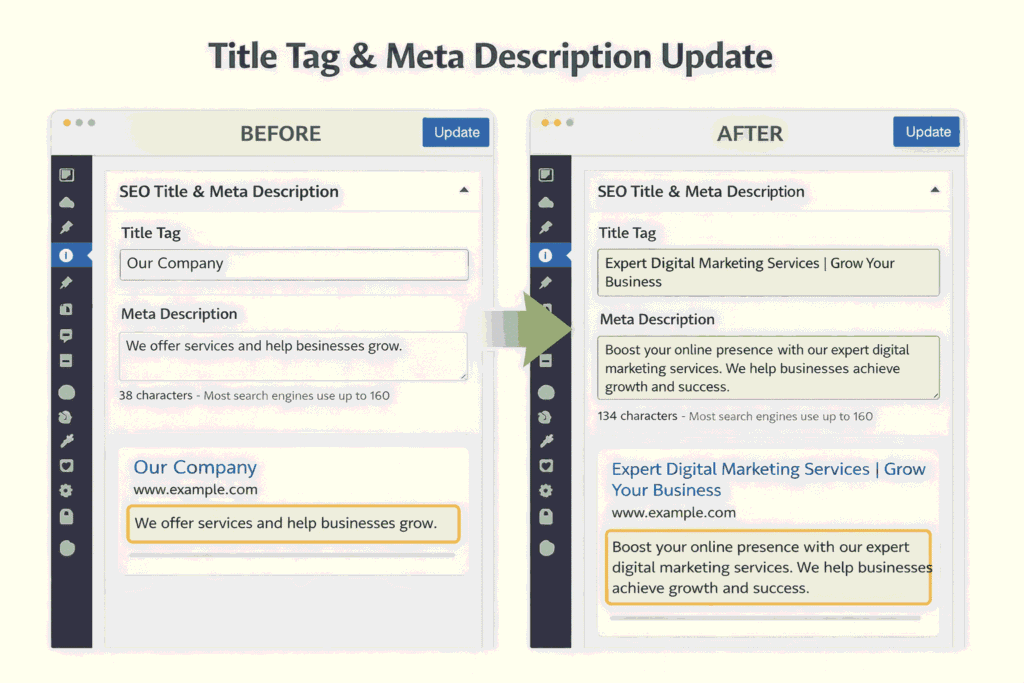
Here’s the thing: Week 3 is when the first tangible changes appear on your actual website. Your agency should be implementing title tag and meta description updates, fixing H1/H2 structure across your top pages, improving internal linking between service or product pages, and compressing oversized images that slow load time.
For startups on a $300–$500/month budget, expect 3–5 pages optimized this week. Higher-budget packages in the $600–$700 range might cover 8–10 pages. The scope is smaller than enterprise SEO — but the same fundamentals apply.
Week 4 — Reporting, Content Plan, and Month 2 Roadmap
Week 4 is documentation and handoff. Your agency delivers an end-of-month report covering: what was audited, what was fixed, what remains in backlog, the keyword strategy with priority assignments, and a content calendar for Month 2.
Look — if you’re finishing Month 1 and your agency hasn’t sent you a written deliverable with at least the audit findings, keyword map, and a content plan, here’s what actually matters: ask for it explicitly before you pay Month 2’s invoice. A professional SEO partner documents everything. Vague “ongoing optimization” updates are not deliverables.
Quick Comparison: What’s Included at Different Startup SEO Budget Levels
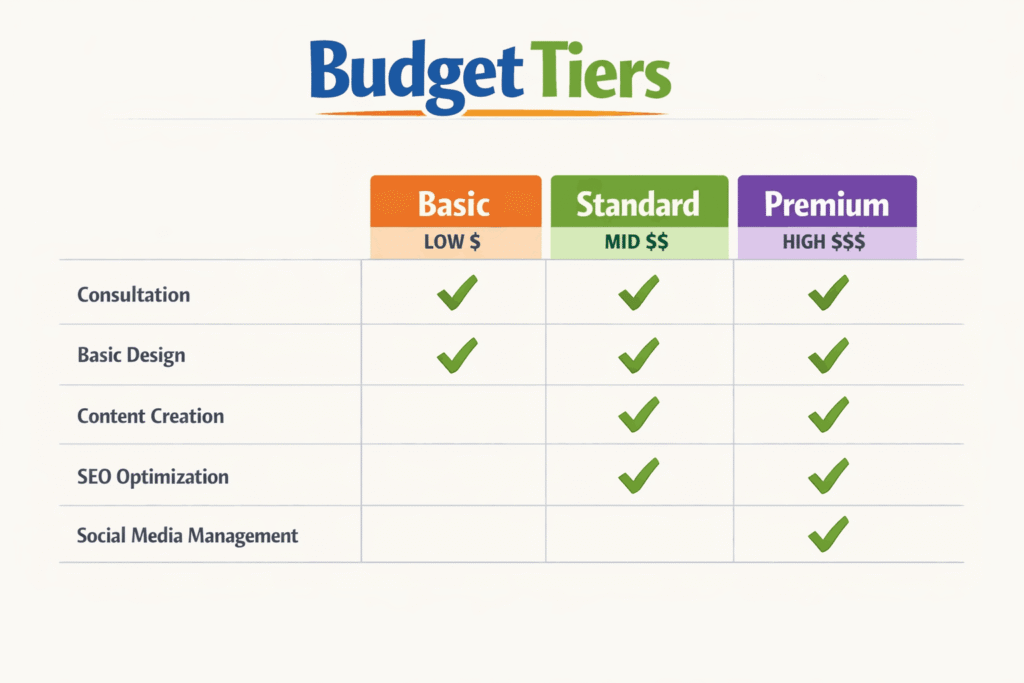
| Budget Range | Best For | Key Month 1 Deliverable | Limitation |
|---|---|---|---|
| $300–$500/month | Brand-new sites, local seo service startups | Technical audit + 3–5 page optimizations | No content creation; minimal link work |
| $500–$700/month | SaaS or e-commerce startups, 10–30 pages | Full audit + keyword map + content calendar | Light link building begins Month 2 at earliest |
| $700–$1,200/month | Startups in competitive niches | Audit + optimizations + 1–2 content pieces + GSC setup | Still no significant ranking movement in Month 1 |
| DIY with tools | Founders with 5–10 hrs/week available | Semrush/Ahrefs setup + self-directed audit | High time cost; steep learning curve |
The Red Flags That Mean Your Agency Is Wasting Your Money
Some experts argue that any SEO activity in Month 1 is better than none — even if it’s just automated reports and minor fixes. That’s valid if your baseline is zero. But if you’re paying a recurring monthly fee, “some activity” is not the standard. Deliverables are.
Here are the specific red flags to watch for in Month 1:
- No GSC or GA4 access requested in Week 1
- No written audit report by end of Week 2
- Keyword research that lists only high-volume, high-competition terms (a new domain cannot compete for these — targeting them wastes your budget)
- Backlink reports showing dozens of links from irrelevant directories (low-quality link spam, not legitimate outreach)
- A Month 1 report that’s just a PDF with charts but no explanation of what was done or what comes next
I’ve seen conflicting data on how quickly bad SEO causes damage — some sources say Google penalizes within weeks, others say penalties only surface during algorithm updates months later. My read is this: the risk isn’t always immediate, but it compounds. A spam backlink profile built in Month 1 can take 6–12 months of disavow work to clean up.
That’s not a scare tactic. It’s just the math.
What “Affordable” Actually Means for Startup SEO — And What It Doesn’t
Affordable SEO for startups is not cheap SEO. The distinction matters. Affordable means right-sized scope at a budget that makes sense for a pre-revenue or early-revenue business. Cheap means cut corners, automated tools with no human strategy, and deliverables that look real on paper but don’t move any needle.
At $300–$700/month, you’re buying focused execution — not a full-service agency team. You should expect one or two dedicated tasks per week, honest communication about timeline, and a clear Month 2 plan before Month 1 ends. You should not expect a dedicated account manager, daily updates, or aggressive link building campaigns.
DIY with tools vs. hiring an affordable agency: DIY using Semrush ($140/month) or Ahrefs ($29–$99/month) is suited for founders with 8–10 hours per week and genuine interest in learning. An affordable agency works better when your time is more valuable than the cost of delegation — even if the agency’s output per month is modest.
The key difference is accountability. An agency is contractually responsible for deliverables. A DIY approach depends entirely on your own consistency.
Voice Search Q&A
Q: What’s the best thing an affordable SEO service does for a startup in Month 1? A: The most valuable Month 1 deliverable is a technical audit that identifies what’s blocking Google from properly crawling and indexing your site. Fixing those issues first makes everything else — content, links, rankings — work faster.
Q: How do I know if my SEO agency is doing real work in the first month? A: Ask for three things: the technical audit report, the keyword research document, and confirmation that Google Search Console is set up and verified. If any of those are missing by end of Week 2, ask why immediately.
Q: Should I expect any ranking improvements in my first month of SEO? A: No. According to Shopify’s SEO data (2025), most sites don’t see measurable ranking signals until around Month 3. Month 1 is setup and strategy — not traffic results. Any agency promising rankings in 30 days is overpromising.
Q: Why does startup SEO take so long to show results? A: New domains have no authority, no backlinks, and no crawl history with Google. Building those signals takes time. Month 1 lays the groundwork; Months 2–3 begin execution; Months 4–6 are when organic traffic starts compounding.
Q: When should I start worrying that my affordable SEO isn’t working? A: If by the end of Month 3 you’ve received no written reports, seen no on-page changes, and your Google Search Console shows zero impressions growth — that’s when concern is justified. Month 1 silence is normal. Month 3 silence is a problem.